


Navigation
Contact us
Phone
Message
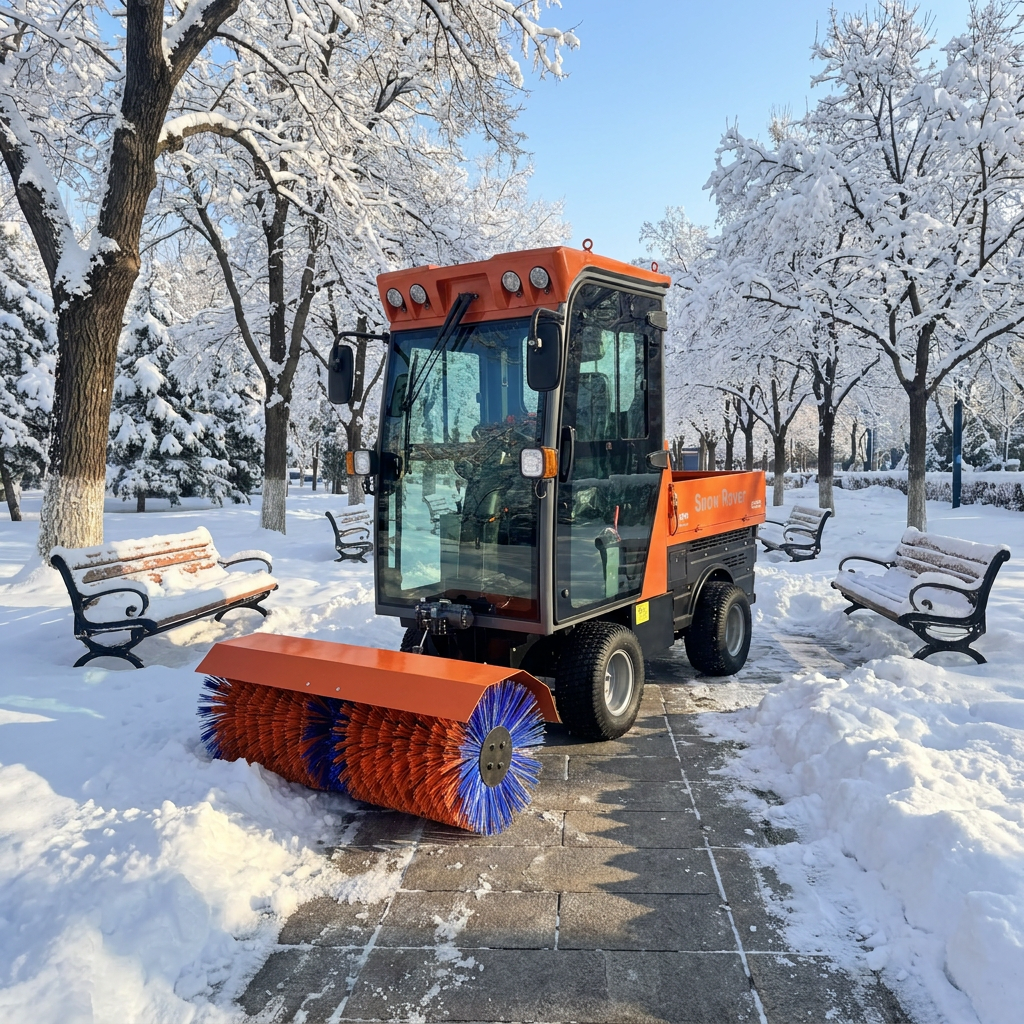
Buying a Ride-On Snow Sweeper - 5 Tips & Things to Know (VOER 4WD140)
Buying a ride-on snow sweeper requires more than comparing engine size, working width and price. The right machine has to match the snow you actually get, the surfaces you clear, the number of hours you run in a season, and the comfort that keeps an operator effective in the last hour of a long shift.
Buying a snow sweeper requires more than comparing engine size, appearance and price. The right machine must match the job, the working environment, the operator and the long-term service requirements. These five practical tips can help municipal crews, contractors, industrial facility managers, estate operators and equipment dealers make a more informed purchase.
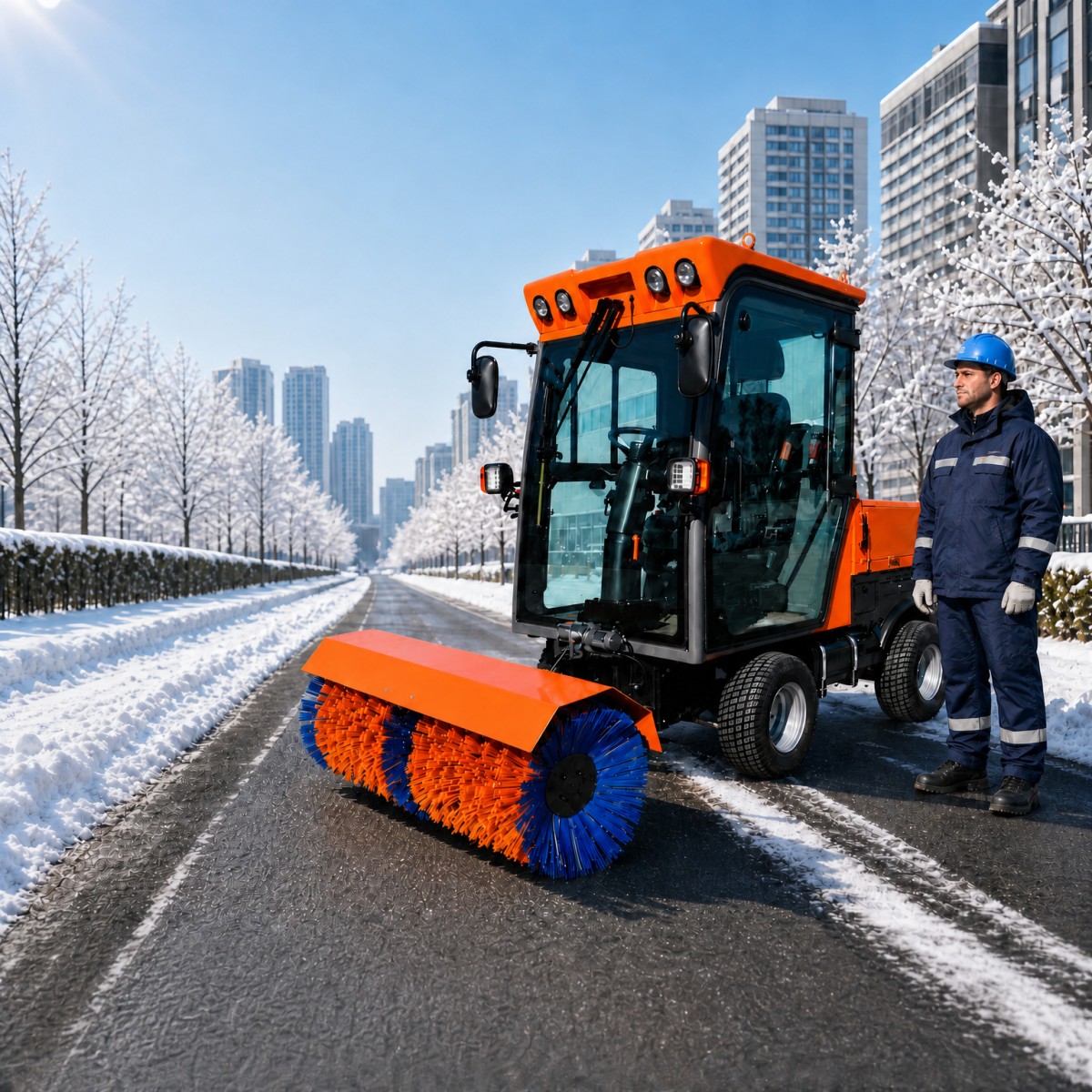
1. Define the Snow, the Site and the Duty Cycle
Start with the conditions the machine will work in, not with the specification sheet. Record the snow you normally get, the area you are responsible for, and how many hours the machine will run in a season.
The questions worth answering before you compare models are practical ones: Is the snow usually light and dry, or wet and heavy? Does it drift into place, or fall evenly? Are the surfaces paved, or do you also clear unsealed tracks and yards? How wide is the narrowest gap the machine must pass through? How many hours will it run in a single storm, and who drives it?
The VOER 4WD140 is a ride-on multi-functional snow sweeper built around a 1,400 mm sweeping width, a 1,200 mm snow throwing width and a 1,500 mm snow plow width, with a 25 HP engine and a 15 L fuel tank. That combination suits organisations that clear large areas repeatedly through the winter - roads, aprons, car parks, yards and access routes - rather than occasional light clearing around a single building.
The operator station deserves as much attention as the engine. The 4WD140 is supplied with an enclosed cab with a glazed windscreen and side windows, roof-mounted work lights and mirrors, and the machine starts electrically. On a machine that may run eight or ten hours through a storm, that is not a comfort extra - it is what keeps the operator warm, dry, visible and able to concentrate, which is where most small snow-clearing errors begin.
One point is worth thinking through early. A machine that is specified for the worst week of the year will spend most of the season working well inside its limits. A machine specified for an average week will meet its limits exactly when the schedule is least forgiving. Compare the duty cycle you actually run, not the one you hope for.
2. Understand the Three Working Widths Before You Compare
Buying a snow sweeper becomes clearer when you stop reading a single working width and compare the full set. Sweeping, throwing and plowing do different jobs on the same surface, and a machine designed around one of them cannot simply be stretched to cover the others.
On the 4WD140 the three widths are 1,200 mm for snow throwing, 1,400 mm for snow sweeping and 1,500 mm for snow plowing. They correspond to three different front attachments, which is why the machine is quoted with three figures rather than one. Read them together with the clearing depths: 200 mm when sweeping with the roller brush, and 600 mm when throwing.
The roller brush itself is worth checking in detail. It turns at 360 rpm and uses a mixed steel wire and nylon brush, a combination chosen because the two materials do different jobs - the steel wire breaks up compacted snow and light ice, while the nylon carries the material across the surface without marking it.
Read the table as a system rather than a scoreboard. A narrower attachment is not automatically worse - a 1,200 mm throwing attachment moves snow further and faster than a wider blade can, while the 1,500 mm plow clears a wider lane but only relocates snow rather than removing it from the surface.
Ask each supplier for the latest model-specific specification sheet and compare machines under the same definitions and units. Width, depth and power figures are only comparable when they are measured the same way.
3. Check the Drive, Steering and Traction System for Your Surfaces
Traction is the specification that decides whether a snow machine is productive or merely present. A machine that cannot hold its line on a slope, an icy apron or an unsealed access route will spend the storm doing half the job twice.
The 4WD140 uses a hydraulic drive system with full-time 4WD and two forward gears combined with CVT. Hydraulic drive is worth understanding before you buy: it gives smooth, controllable engagement and lets the machine start into a heavy load without the shock loading that a mechanical transmission passes through to the brush and the frame.
The CVT element matters for a different reason. Snow conditions change within a single shift - wet snow at the start of a storm, compacted ice layers after a freeze, slush at the end. A stepless transmission lets the operator match working pace to the surface instead of choosing between two fixed speeds and living with the compromise.
Steering geometry is the third part of the same system. The 4WD140 steers through +/- 25 degrees, which is what lets a 1,300 mm wide machine work around parked vehicles, planters, pillars and loading bays without needing a second pass. The machine runs on 20 x 8-10 tyres, and electric start matters more than it sounds in this class: it removes the pull-start effort from a cold, exposed morning and lets the machine be brought into service by any operator on the shift rota.
Before you order, confirm the machine is specified for the surfaces you actually work on, and that the tyre specification suits them. A machine that is well matched on paper can still disappoint if its tyres are chosen for the wrong surface.
4. Budget for Attachments, Consumables and Seasonal Changeover
Snow equipment is judged in the middle of a season, when one missing part stops the whole schedule. Before you order, list what must arrive with the machine and what you need to keep in stock:
• The attachment set you are quoting. Sweeping, throwing and plowing attachments each have their own working width, so the width you plan around is the width of the attachment you actually order.
• Brush and edge wear. The roller brush and the plow edge take the abrasion, not the frame. Ask for the consumable list and current prices with the quotation, and treat them as a running cost per working hour.
• Cab consumables. Wiper blades and cab glass are the parts that decide whether the operator can still see at the end of a shift.
• Changeover time and labour. Switching between sweeping, throwing and plowing is productive only if it is quick. Ask how the attachments are changed and whether the process needs a second person.
• Documentation. Operation manual, specification sheet, certification documents and warranty terms should all be supplied with the order.
5. Calculate Total Cost, Freight and Supplier Support
Purchase price is only one part of ownership. Freight, import charges, fuel, attachment and wear-part replacement, routine service, storage and the cost of a machine standing idle during a storm all belong in the same comparison.
Freight deserves attention on this class of machine. The net weight is 695 kg (1,532 lb) and the gross weight 747 kg (1,647 lb), and the packing size of 2,600 x 1,300 x 2,300 mm (102 x 51 x 91 in.) gives about 7.77 m3. On most routes a shipment this size is rated on volume rather than weight. Check both figures with your forwarder and confirm how many units fit in the container you intend to book before comparing quotations from different suppliers.
Alongside freight, estimate fuel from the 15 L tank and your seasonal hours, and add the brush and edge cost per working hour. The engine carries EPA / Euro 5 certification; documentation requirements differ between markets, so state your destination when you request a quotation.
VOER supplies the 4WD140 ride-on multi-functional snow sweeper and other compact machinery for municipal crews, contractors, industrial sites, estates, rental businesses and equipment dealers. Buyers can request current specifications, attachment and configuration options, packaging data, order information and market-relevant documentation before purchasing.
Safety note: Keep the cab door closed and stay seated while the machine is working. Never clear a blocked brush, auger or chute by hand or with your feet - shut the engine down, remove the key and wait until all movement has stopped, then use a clearing tool. Keep all guards, shields and covers in place, wear eye protection and slip-resistant footwear when working around the machine, and keep bystanders well clear of the discharge side. Work at a speed that suits the surface and the visibility, and never leave the machine running unattended. Operate only according to the manual.
Who the VOER 4WD140 Suits
FAQ
Is the VOER 4WD140 a ride-on machine?
Yes. The 4WD140 is a ride-on snow sweeper with an enclosed cab, glazed windscreen and side windows, roof-mounted work lights and mirrors.
What working widths does it offer?
1,200 mm for snow throwing, 1,400 mm for snow sweeping and 1,500 mm for snow plowing. Each width corresponds to a different front attachment, so the figure you plan around depends on the attachment in your order.
How deep can it clear?
200 mm when sweeping with the roller brush, and 600 mm when throwing snow. Real performance depends on snow type, moisture and surface.
What is the roller brush specification?
The brush turns at 360 rpm and uses a mixed steel wire and nylon brush, so the steel wire breaks up compacted snow and light ice while the nylon carries material across the surface without marking it.
What engine and starting system does it use?
A Zongshen 740 cc petrol engine rated at 25 HP with electric start, and a 15 L fuel tank. The engine carries EPA / Euro 5 certification.
How is it driven and steered?
Hydraulic drive with full-time 4WD, two forward gears combined with CVT for stepless speed control, +/- 25 degrees of steering, on 20 x 8-10 tyres.
Can it do more than sweep snow?
Yes. The machine is built around a multi-functional front attachment design covering snow throwing, sweeping and plowing, which is why it is quoted with three working widths. The attachment set must be specified in the order.
How much does it weigh, and how does it ship?
Net weight 695 kg (1,532 lb), gross weight 747 kg (1,647 lb), packing size 2,600 x 1,300 x 2,300 mm (102 x 51 x 91 in.), about 7.77 m3.
What should I confirm before ordering?
The attachment set and the working widths in the quoted configuration, the tyre specification, the brush and edge consumable list with prices, the spare-parts list and lead times, warranty terms, the documentation required for your destination market, and the packing data for the freight booking.
Summary
Buying a ride-on snow sweeper becomes easier when the decision is based on job fit, working widths, the drive, steering and traction system, attachment and consumable cost, and supplier support. The VOER 4WD140 packages a 25 HP engine with electric start, full-time 4WD with hydraulic drive, snow sweeping, throwing and plowing widths of 1,400 mm, 1,200 mm and 1,500 mm, and an enclosed operator cab into one machine.
Compare these factors carefully, and request a configuration that reflects your actual working conditions rather than choosing on price alone.
This stunning beach house property is a true oasis, nestled in a serene coastal community with direct access to the beach.
Contact
West Street, Melbourne Victoria 3000 Australia